Blog
What Actually Makes a Device “Limited Edition”?

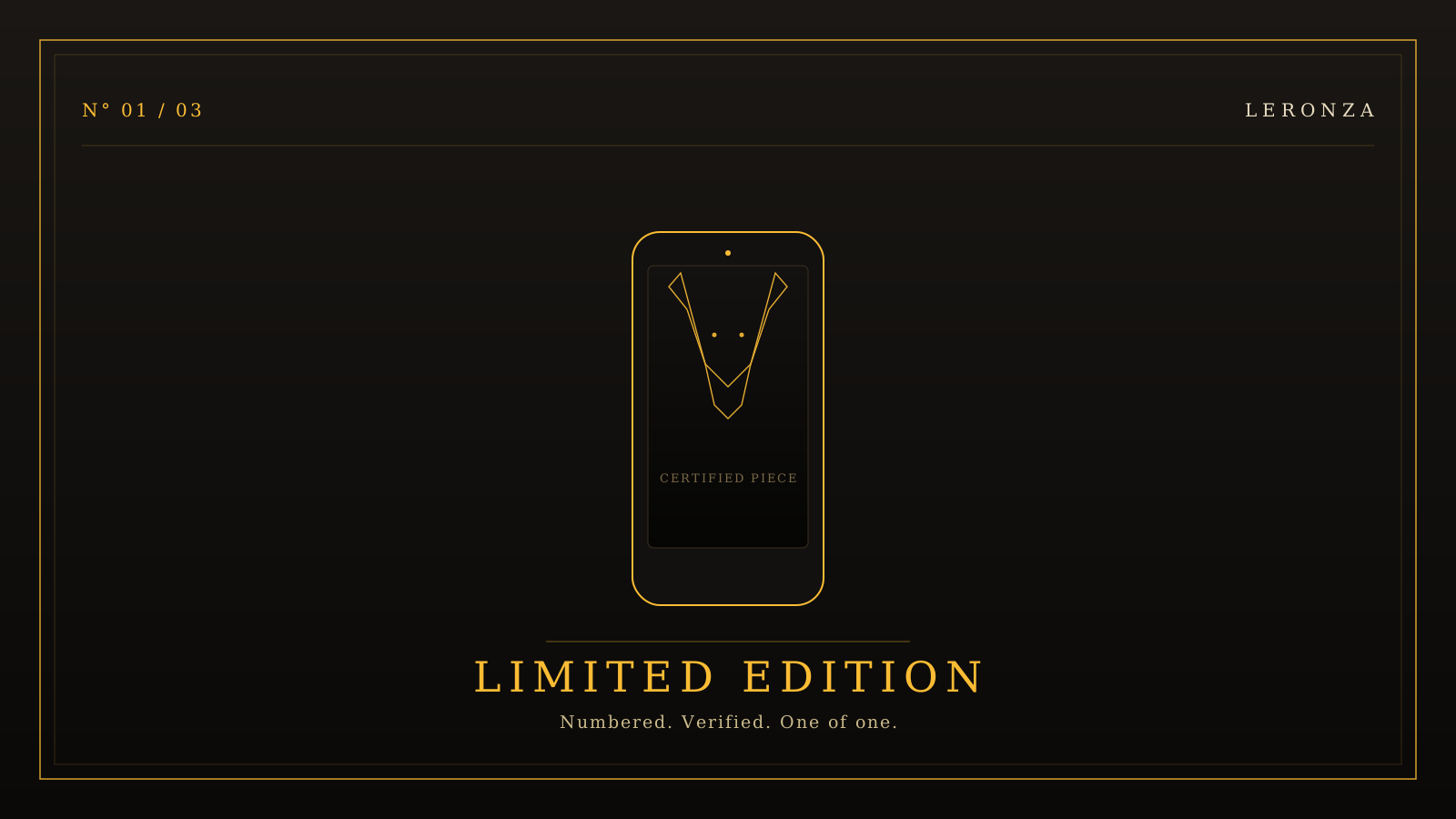
The words “limited edition” appear on more luxury technology than could ever plausibly be scarce. Somewhere between a marketing sticker and a genuinely numbered, one-of-a-kind commission, the term has lost most of its meaning — which makes it worth asking, plainly, what it should actually mean.
A device only qualifies as a true limited edition when its total production run is fixed, disclosed, and verifiable — typically through a serial number, a maker’s certificate, or public documentation of how many units exist. If a seller cannot tell you the exact edition size, or cannot verify a specific unit against it, the term is being used as marketing language rather than a factual description.
Key Takeaways
- “Limited edition” has no legal definition in consumer technology — it only means what the maker chooses to disclose and can prove.
- There is a real difference between a numbered limited run, a strictly limited release, and a one-of-one bespoke commission.
- Verifiable authenticity — a serial record, a certificate, or direct confirmation from the maker — is what separates a genuine limited edition from a marketing label.
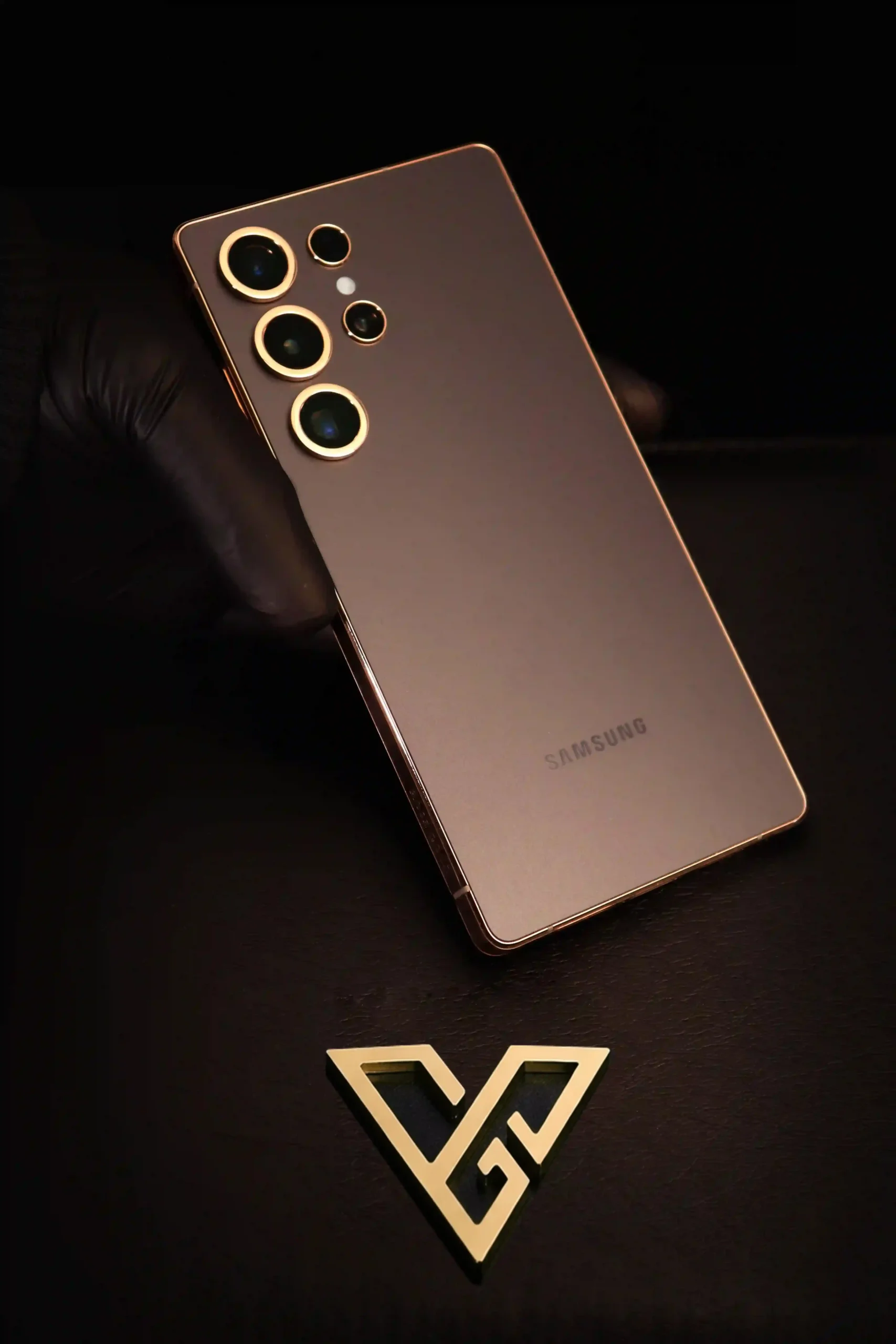
- GoldPrivé has produced examples of each tier, from the numbered 24K Gold Icon Gold iPhone 18 Pro Max to a one-of-three solid gold, diamond-set Centurion iPhone 12 Pro.
- Before buying, ask for the edition size, the unit’s position within it, and how ownership can be independently verified.
At Leronza, this question comes up constantly from clients comparing a mass-market “limited” release against a genuinely bespoke, individually commissioned device. The distinction matters more than most buyers realize — it affects resale value, provenance, and whether the object will still mean anything in twenty years.
What “Limited Edition” Is Supposed to Mean
In its strictest sense, a limited edition is a production run capped at a fixed, disclosed number of units, after which no more will ever be made. The concept is borrowed from fine art printmaking and horology, where a numbered edition (say, “42 of 250”) is stamped or engraved directly onto the object and recorded against a maker’s registry. That number is the entire point — it is what makes piece 42 different from an identical-looking unlimited product.
Consumer technology adopted the phrase without adopting the discipline behind it. A phone case, a colourway, or a co-branded accessory can be labelled “limited edition” simply because a company plans to stop selling it eventually — which describes almost every product ever discontinued. That is not scarcity. It is inventory planning with better marketing copy.
Limited Edition vs. Numbered Edition vs. One-of-One: What Actually Separates Them
These three terms get used almost interchangeably in luxury retail, but they describe meaningfully different levels of exclusivity. The table below reflects how the terms are generally understood across fine jewellery, watchmaking, and bespoke luxury goods — the industries the “limited edition” label was borrowed from.
| Type | What It Means | Verifiable? | Typical Example |
|---|---|---|---|
| Marketing “Limited” | Discontinued or seasonal item; run size undisclosed | No | A colourway sold “while stocks last” |
| Numbered Limited Edition | Fixed, disclosed run (e.g. 1 of 50); each unit numbered | Yes, via serial record | GoldPrivé’s 24K Gold Icon Gold iPhone 18 Pro Max series |
| One-of-One Commission | A single, bespoke piece made to one client’s specification — no others exist | Yes, via direct maker confirmation | Leronza’s $500,000 solid gold Centurion iPhone 12 Pro |
The further right you move on that table, the closer the object gets to being irreplaceable rather than merely uncommon. A numbered edition of fifty is genuinely scarce. A one-of-one commission is, by definition, the only one that will ever exist.
Real Examples: How GoldPrivé Approaches Both Tiers
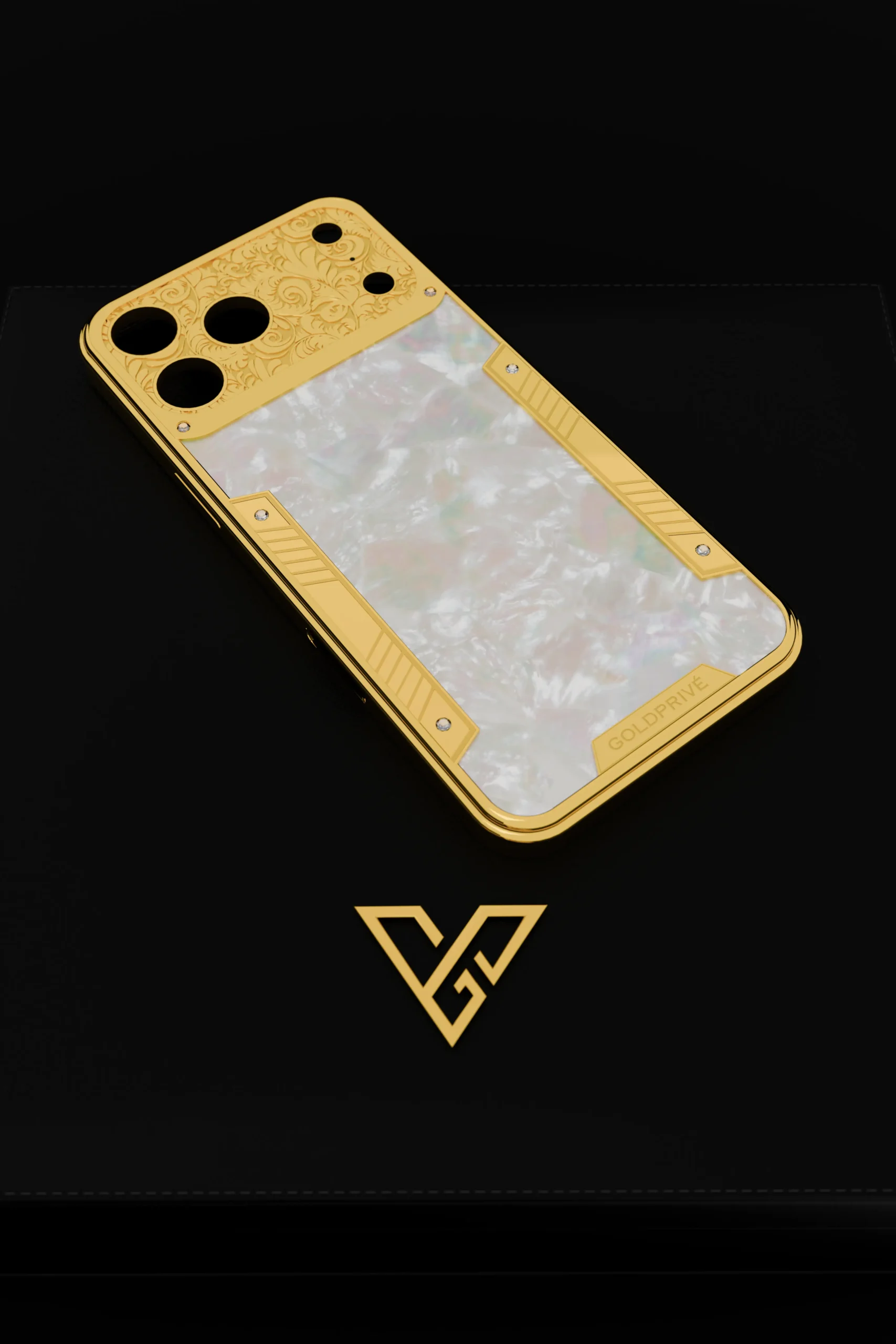
GoldPrivé’s 24K Gold Icon Gold iPhone 18 Pro Max/Max collection — finished in Black Rhodium plating with a hand-set 24K gold tiger emblem and a crocodile leather back panel — was released as a strictly limited run, with each device individually handcrafted rather than assembled to a template.
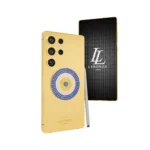
At the other end of the scale, GoldPrivé’s solid 24K gold, diamond-encrusted Centurion iPhone 12 Pro was commissioned as one of only three that will ever exist. As Manish Manshani, Leronza’s General Manager, explained at the time:
“His device is one of only three that will ever be made.”— Manish Manshani, General Manager, Leronza
Both are legitimately exclusive. But only one of them can be reproduced, even in principle — and that distinction is exactly what a buyer should be paying to understand before spending on either.
Why Verification Matters More Than the Label Itself
A number engraved on a device is only meaningful if it can be checked against something. This is why serious limited-edition makers — and Leronza specifically — tie every commissioned or numbered piece to a verifiable record rather than relying on the label alone. Leronza’s own product verification process exists for exactly this reason: to let a client (or a future buyer, if the piece is ever resold) confirm that a specific device is genuinely what it claims to be, rather than taking a listing’s word for it.
This is also where a lot of “limited edition” consumer electronics fall short. A stamped number with no registry behind it is decorative, not proof. If a maker cannot answer “how many were made, and can you confirm mine is authentic,” the numbering is cosmetic.
The Case For and Against Chasing “Limited Edition” Labels
When It’s Worth It
- The maker discloses an exact, fixed run size
- Each unit is individually numbered and traceable
- Verification is offered independently of the sales process
- The craftsmanship or materials are genuinely non-repeatable
When to Be Skeptical
- “Limited” but no stated quantity anywhere
- No serial number or certificate offered
- The same “limited” design reappears in later seasons
- Urgency (“while stocks last”) replaces actual scarcity data
Buyer Considerations: What to Ask Before You Commit
- Ask for the exact edition size. “Limited” without a number is an adjective, not a specification.
- Ask where your unit sits in that run. Piece 3 of 12 is a different object, in resale terms, from piece 11 of 12.
- Ask how ownership can be verified later. A number is only useful if a registry or maker can confirm it against your specific device.
- Ask whether the design will reappear. A genuinely limited piece should not resurface as a “new” limited edition next year.
- Consider whether you want scarcity or uniqueness. A numbered edition is rare; a one-of-one commission is singular — the right choice depends on whether you want to own part of a story or the whole of one.
Why UHNW Buyers Increasingly Choose Commissioning Over Collecting
This is closely tied to a pattern explored in who actually commissions gold iPhones, and why: many of Leronza’s clients are not trying to acquire a limited edition at all — they are commissioning a piece that will never be replicated for anyone else. For that group, a numbered run of fifty still involves fifty near-identical objects. A bespoke commission, discussed in more detail in choosing between gold, platinum, and diamonds for a bespoke phone, sidesteps the question of edition size entirely — there is no run to be part of, only the piece itself.
Cost is naturally part of that decision. A breakdown of what one-of-one commissioning actually involves financially is covered separately in how much a one-of-one gold smartphone really costs, for buyers weighing a numbered edition against a fully bespoke piece.
Preserving a Limited or One-of-One Piece
Whichever tier a piece falls into, its long-term value depends on the same basic care a fine watch or jewellery piece would receive: keeping any certificate or documentation with the device rather than separate from it, avoiding unauthorized re-plating or repairs that could break the chain of provenance, and having gold or diamond work serviced only through the original maker where possible. Leronza’s own gold plating services page outlines how re-finishing and maintenance are handled for existing clients without disturbing a piece’s original documentation.
Frequently Asked Questions
Is every “limited edition” phone actually rare?
No. The term has no enforced definition in consumer technology, so it is applied to everything from genuinely numbered runs of a few dozen units to seasonal colourways with no disclosed production cap at all. The label alone tells you nothing — the disclosed run size and verification method do.
What’s the difference between a limited edition and a one-of-one commission?
A limited edition is a fixed run of more than one identical (or near-identical) unit, each numbered within that run. A one-of-one commission is built to a single client’s specification and is never repeated for anyone else — there is no run size because there is only one piece.
How can I verify a limited edition device is genuine?
Ask the maker whether the unit is tied to a serial record or registry that can confirm its position within the stated edition. Leronza, for example, offers a product verification process so a specific device can be checked against official records rather than taken on trust.
Does a higher edition number affect value?
Generally, lower numbers within a run (especially “1 of X”) tend to attract stronger collector interest, but the more significant factor is usually the size of the run itself and whether the piece can be verified at all. A verified 1-of-12 piece will typically outperform an unverifiable “limited” piece with no stated run size.
Are one-of-one commissions more valuable than numbered limited editions?
Not automatically — value depends on materials, craftsmanship, and provenance, not exclusivity tier alone. What a one-of-one commission guarantees is that no equivalent object exists anywhere else, which is a different kind of value than owning one of a small, numbered group.
Can a “limited edition” design be re-released later?
If it is, that is a strong signal the original label was a marketing choice rather than a genuine production cap. A true limited edition, by definition, is not repeated once its stated run is complete.
Does Leronza offer both numbered editions and one-of-one commissions?
Yes. GoldPrivé has produced strictly limited numbered collections, such as the 24K Gold Icon Gold iPhone 18 Pro Max/Max, alongside fully bespoke one-of-one commissions such as the solid gold, diamond-set Centurion iPhone 12 Pro. Which route suits a client depends on whether they want a numbered piece within a small group or a design that will never exist anywhere else.
Ultimately, “limited edition” should describe a fact you can check, not a feeling the packaging is trying to create. Whether that fact is “1 of 50” or “1 of 1,” the number only means something if someone can stand behind it.
Interested in a numbered edition or a fully bespoke, one-of-one commission?