Blog
Solid Gold vs. Gold-Plated iPhone: What’s the Real Difference?

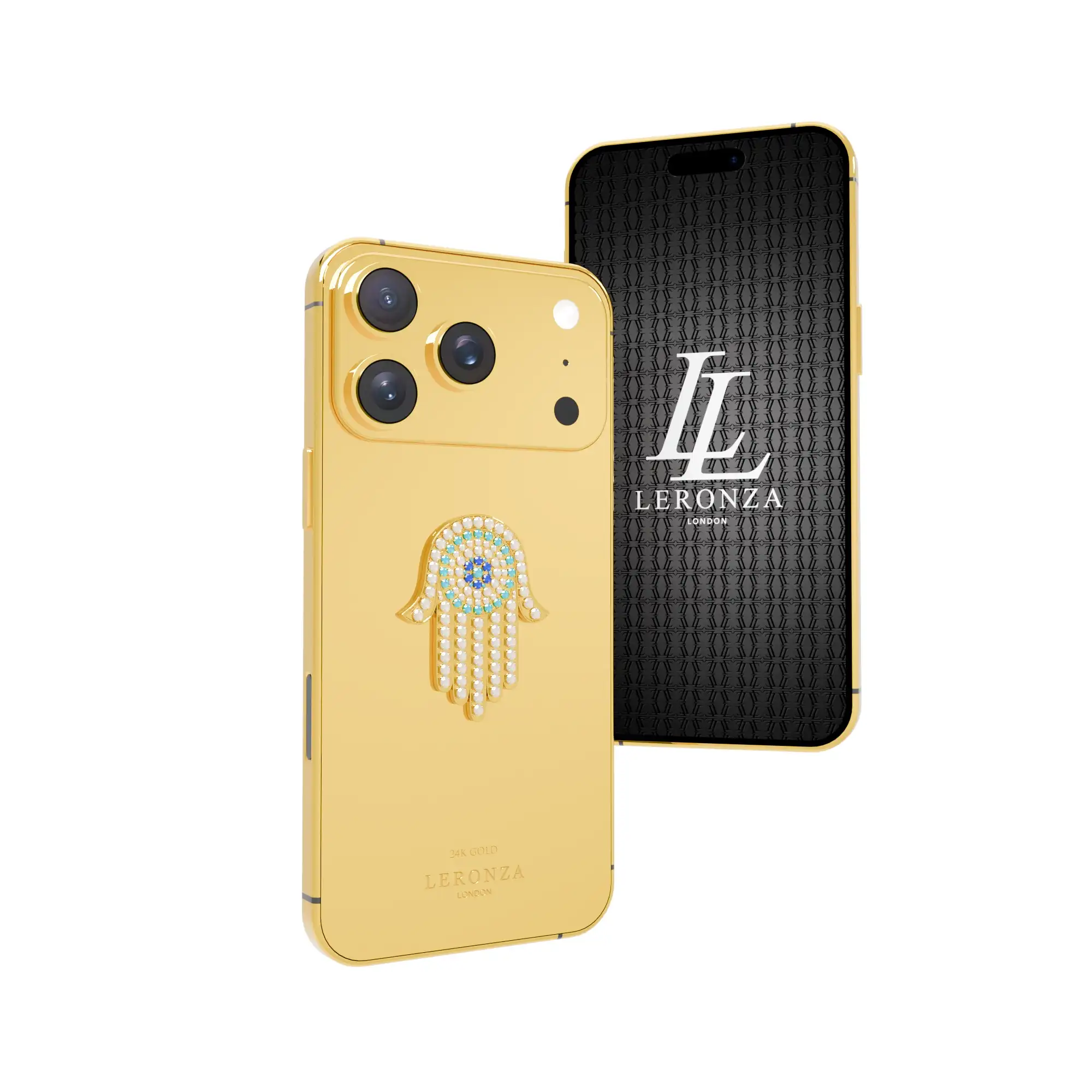
“Solid gold” and “gold-plated” get used almost interchangeably in luxury tech marketing, which is strange, because they describe two completely different objects. One is a thin, genuine layer of precious metal bonded to a base material. The other is, quite literally, a block of gold. Confusing the two — deliberately or not — is one of the easiest ways to overpay for the wrong thing.
Gold-plated means a base metal case or component is coated with a thin layer of real gold, usually measured in microns (millionths of a metre). Solid gold means the object — or a specific component of it — is made entirely of gold at a stated karat purity, with no base metal underneath. Both can be genuine, verifiable, and valuable; they simply are not the same product, and they should not carry the same price.
A base-metal (or in some cases titanium/aluminium) case and backplate electroplated with a thin, continuous layer of gold — typically 5 to 7 microns in premium consumer devices. The gold is real; the volume of it is small.
An object, or a specific component of it, cast or worked entirely from gold at a declared karat purity (commonly 18K or 24K), with measurable weight in grams. There is no base metal to wear through to.
Key Takeaways
- Karat purity tells you how pure the gold is (24K ≈ 99.9% gold, 18K = 75% gold by weight); it does not tell you how much gold is present.
- Plating thickness is measured in microns, not karats — a 24K-plated case can still contain very little actual gold if the layer is thin.
- Most luxury smartphone “gold” products, including the majority of GoldPrivé’s gold plating services, are genuine plated finishes over the original device, not solid-gold devices.
- Where Leronza does use solid gold, it is typically a specific component — such as an 18K solid gold charm — rather than the entire phone body, with the one clear exception being fully bespoke, one-of-one commissions.
- Neither approach is “fake.” The distinction is about construction and quantity of gold, not authenticity.
This matters more in luxury technology than in almost any other category, because the underlying object — an iPhone — is identical either way until the metal goes on. The difference in what you’re actually paying for comes down entirely to how much gold is used and how it’s applied, a question that came up directly in our look at what actually makes a device a genuine limited edition, where a plated numbered series and a solid-gold one-of-one commission sat at opposite ends of the same spectrum.
How Gold Plating Actually Works
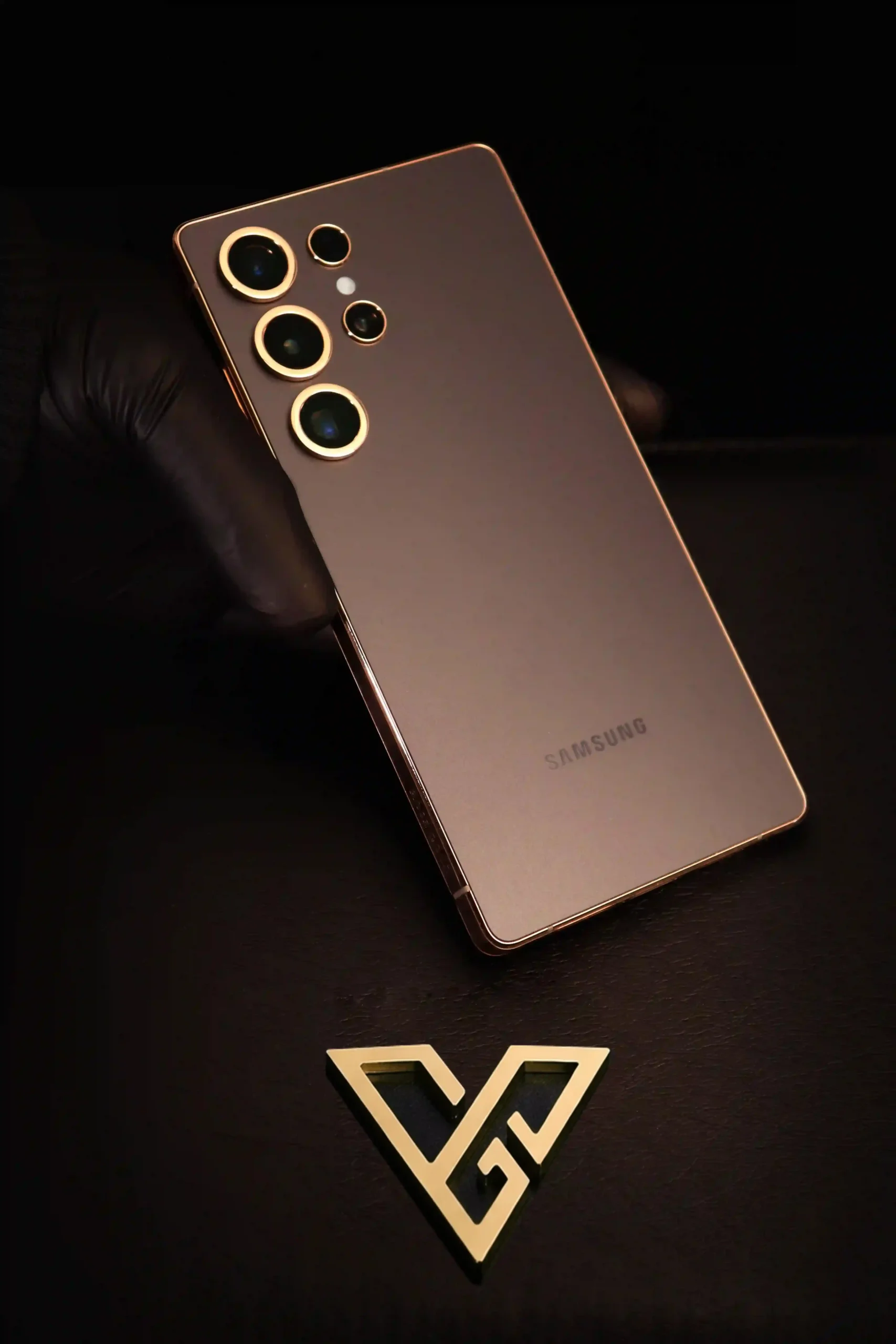
Gold plating is an electrochemical process: a base metal object (in Leronza’s case, the customer’s own iPhone case and backplate) is submerged in a solution containing dissolved gold, and an electric current draws a thin, even layer of gold onto the surface. The result is a genuinely gold surface — not a paint, not a dye — bonded to whatever lies beneath it.
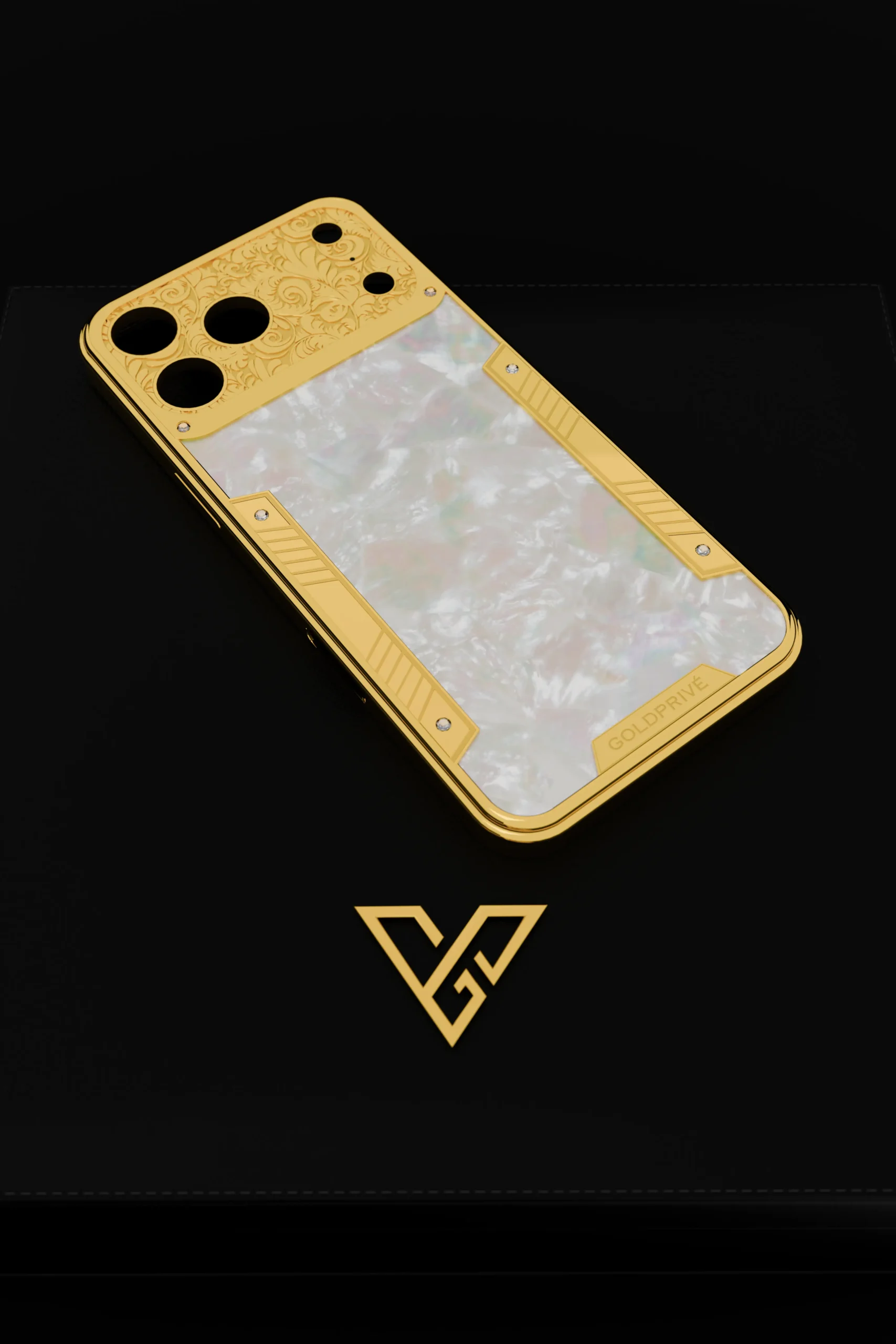
What varies enormously between makers is thickness. GoldPrivé’s published plating specification across its 24K Gold, Rose Gold, and Platinum iPhone finishes is 5 to 7 microns of precious metal, applied to both the case and backplate. That range is on the higher end of what’s typically used in consumer electronics plating, where anything below roughly 0.5 microns is generally considered decorative rather than durable. Thicker plating resists everyday wear, fingerprints, and micro-scratching for longer before the base layer has any chance of showing through.
How Solid Gold Actually Appears in Leronza’s Work
This is where most marketing gets vague, so it’s worth being specific. Across GoldPrivé’s catalogue, “solid gold” almost always refers to a distinct decorative component — not the entire phone.
Pieces such as the Hamsa Eye Amulet and LuxEvil Charm pair a standard 5-to-7-micron plated case and backplate with a separate charm crafted from roughly 20 to 35 grams of 18K solid gold, then finished with a 24K gold layer to match the backplate tone. The charm itself is genuinely solid; the phone body around it is plated. Both facts are true of the same product at once.
The exception is fully bespoke commissioning, such as GoldPrivé’s solid 24K gold, diamond-encrusted Centurion iPhone 12 Pro, built as one of only three that will ever exist. This is a categorically different undertaking — a custom-fabricated solid gold body rather than a plated finish over the original device — and priced accordingly, as explored in how much a one-of-one gold smartphone really costs.
Side by Side: Plated Case, Solid Gold Accent, Bespoke Solid Body
The table below reflects Leronza’s own published specifications and catalogue pricing, not industry averages, since plating thickness and gold weight vary widely between makers.
| Construction | Gold Present | Typical Karat | Everyday Durability | Indicative Price |
|---|---|---|---|---|
| Plated case & backplate | 5–7 micron layer over case/backplate | 24K, Rose Gold or Platinum finish | High with normal care; thin surfaces wear over years, not months | From roughly $ 6,610 |
| Solid gold accent charm | 20–35g solid, plus matching 24K layer | 18K solid, 24K overlay | Charm itself does not wear through — there is no base layer to expose | Bundled into charm-model pricing, typically $ 6,610–$ 4,090 |
| Bespoke solid-gold body | Entire fabricated body, gram weight varies by design | 24K solid | No plating to wear at all; durability limited only by handling and the softness of pure gold itself | Custom commission, six figures upward |
Myths vs. Facts
Gold-plated means the gold isn’t real.
Plated gold is genuine gold, electrochemically bonded to the surface. What’s smaller is the quantity, not the authenticity.
A higher karat number always means more gold overall.
Karat measures purity per unit of material, not total quantity. A thick 18K layer can contain more actual gold than a whisper-thin 24K one.
Solid gold phones are a normal luxury product category.
A fully solid-gold phone body is rare and almost always a bespoke, individually commissioned undertaking rather than a catalogue item.
Plating always wears off quickly.
Thickness is the deciding factor. Plating in the 5-to-7-micron range, cared for properly, is designed to hold up over years of normal handling, not weeks.
What the Karat System Actually Measures
Karat purity is a standardised measure of how much of an alloy is gold by weight, out of 24 parts. The U.S. Federal Trade Commission’s jewelry guidance defines 24 karat as effectively pure gold, 18 karat as 75% gold by weight, and 14 karat as roughly 58.3%. This standard, borrowed directly from fine jewellery, is the same one Leronza and most reputable customisers use to describe both plated finishes and solid components — which is exactly why the karat figure alone never tells you how much gold you’re actually getting. That requires the second number: weight, in microns for plating or grams for solid pieces.
Buyer Considerations: Questions Worth Asking Before You Buy
- Ask for the plating thickness in microns. “24K gold” alone describes purity, not quantity applied.
- Ask whether “solid gold” refers to the whole device or a specific component. A solid gold charm on a plated case is a different product from a solid gold body.
- Ask for the gram weight of any solid gold component. Weight is what gives a solid piece intrinsic melt value; a karat figure by itself does not.
- Ask how customization affects warranty and water resistance. Reputable customisers, including Leronza, are upfront that plating and engraving can affect original manufacturer waterproofing and warranty, which is why a separate Certificate of Authenticity and customizer’s warranty typically apply instead.
- Ask what documentation comes with the piece. A verifiable certificate matters more for solid gold or bespoke commissions, where resale value depends on provenance rather than brand alone.
Caring for Plated Finishes vs. Solid Gold Pieces
Both require gentler handling than an untouched phone, but for different reasons. Plated surfaces should be wiped only with a soft, dry cloth and kept away from harsh chemicals, abrasive materials, and prolonged water exposure, since removing the protective foil layer during setup typically ends the customizer’s warranty. Solid gold components carry a different risk profile: pure gold is a naturally soft metal, so solid pieces are more vulnerable to scratching and denting from impact than to surface wear, and are best protected from being dropped rather than from being touched.
Which One Is Actually Right for You
If the goal is a striking, durable finish on a phone you’ll use daily, a quality plated case — the category covered in GoldPrivé’s current iPhone 17 Pro Max collection — delivers real gold, real craftsmanship, and a price that reflects a coating rather than a casting. If the goal is owning something with intrinsic gold value built in, a solid gold accent piece such as those in the iPhone 17 Pro Max Solid Gold collection adds that without the cost of a fully bespoke body. And if the objective is a singular, irreplaceable object rather than a luxury version of an existing product, that’s a different conversation entirely — one covered in more depth in choosing between gold, platinum, and diamonds for a bespoke phone and who actually commissions gold iPhones, and why.
It’s also worth noting that construction method has a measurable effect on long-term value. As discussed in gold iPhone resale value: does 24K customization help or hurt, plated devices are valued primarily as customized luxury goods, while solid gold components retain a baseline material value independent of the phone itself — a distinction that only makes sense once the construction difference is understood.
Frequently Asked Questions
Is a gold-plated iPhone still a “real” gold product?
Yes. The gold applied in plating is genuine, not imitation — it’s a smaller quantity of real gold rather than a fake version of it. The distinction from solid gold is one of volume and construction, not authenticity.
How many microns of gold does Leronza use?
GoldPrivé’s published specification for its 24K Gold, Rose Gold, and Platinum iPhone finishes is 5 to 7 microns applied across the case and backplate, which sits toward the more durable end of typical consumer electronics plating.
Does Leronza sell a fully solid gold iPhone body?
Standard catalogue devices use plating, sometimes paired with a genuinely solid 18K gold accent component. A complete solid-gold body is reserved for bespoke, individually commissioned pieces, such as the one-of-three Centurion iPhone 12 Pro.
Why does an 18K solid gold charm cost less than I’d expect for “solid gold”?
Because the solid gold component is small relative to the whole device — typically 20 to 35 grams — and its price is bundled into the overall customized iPhone price rather than sold as a standalone gold object.
Will gold plating wear off over time?
Thin, low-micron plating can show wear relatively quickly. Thicker plating, in the 5-to-7-micron range Leronza uses, is designed to withstand years of ordinary handling when cared for with a soft cloth and kept away from harsh chemicals and abrasives.
Does customization affect my iPhone’s warranty or water resistance?
It can. Apple’s original warranty may be affected by third-party plating or engraving, and water resistance is typically no longer guaranteed once customization has taken place. Leronza addresses this with its own Certificate of Authenticity and customizer’s warranty covering the customized components.
Which holds value better: plated or solid gold?
They hold value differently rather than one being simply “better.” Plated devices are valued as customized luxury goods tied to the underlying phone; solid gold components carry an intrinsic material value based on weight and purity that exists independently of the device.
The honest version of this comparison is not “solid gold is superior to plated” — it’s that they are different products solving different goals, and the only way to know which one you’re actually buying is to ask for the two numbers that matter: the karat purity, and the weight or thickness behind it.
Ready to compare plated and solid gold options for your own device?